The six stories you’ll hear throughout OBM will be real. The world they live in, however, will not be. Does that make sense? No? I’ll try to explain.
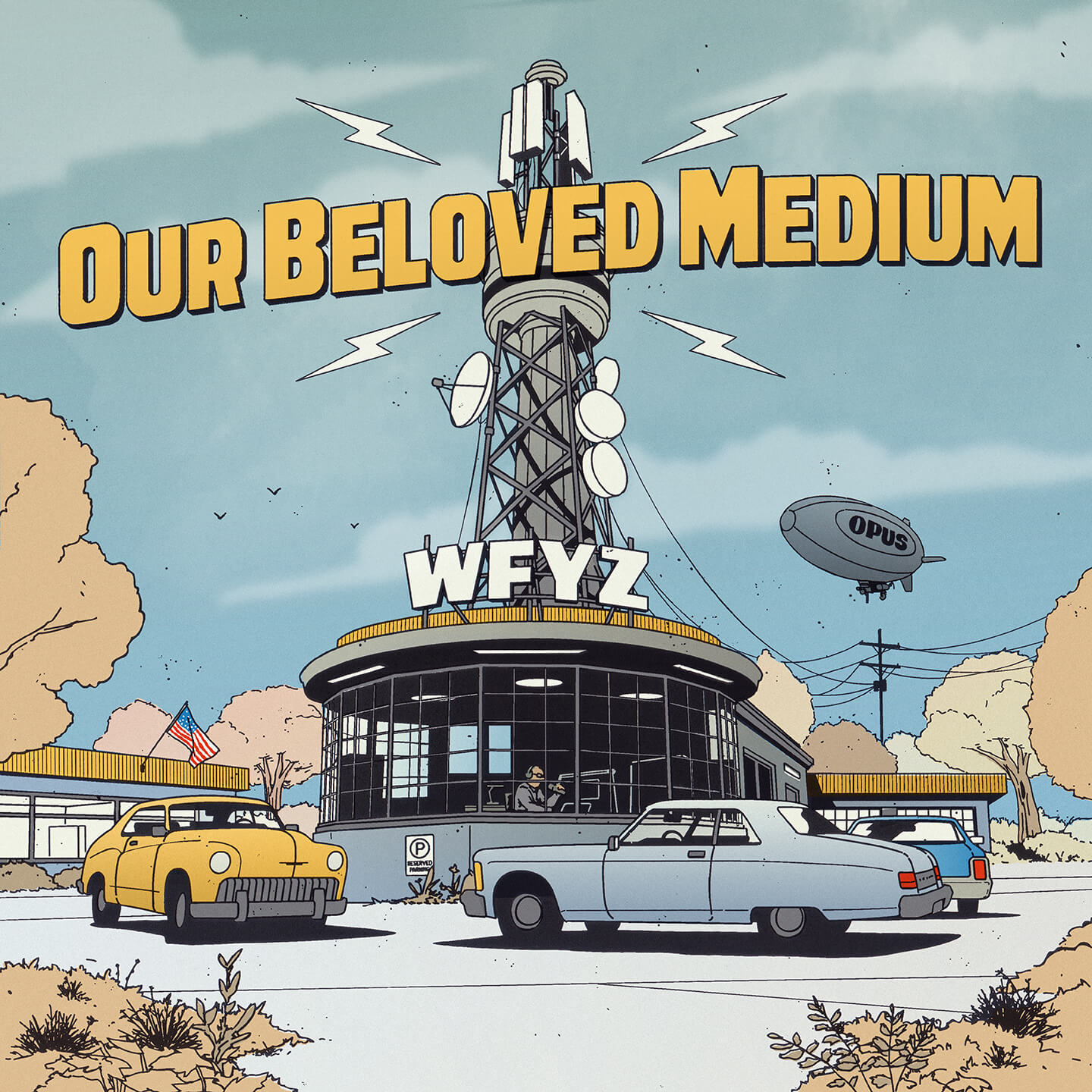
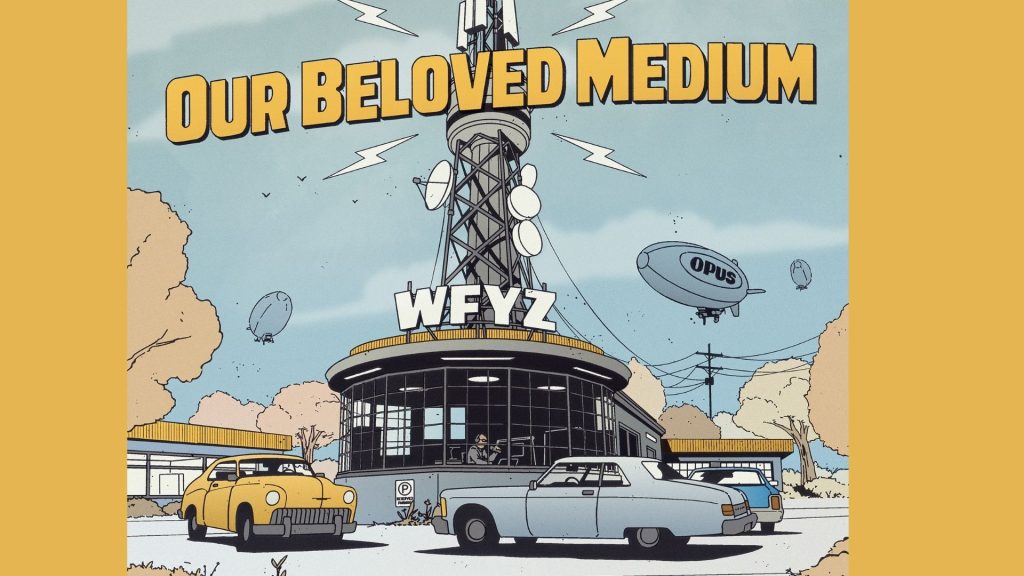
Our Beloved Medium will take place in an alternate reality where only one radio station in the entire world still exists. WFYZ, the fictional radio station in the made up town of Port Bonett, North Carolina has managed to survive the “streaming apocalypse” so far. But trouble looms as tech giant Opus plans to buy the station and use their frequency to simulcast the platform’s “content.”


WFYZ has six weeks to match the offer made by Opus, or the “board of directors” as they’re referred to, will approve the sale, effectively killing the radio medium once and for all.
Each episode of OBM will be like you’re tuning in to WFYZ on a Friday afternoon, when the station’s flagship show The Medium airs. Once considered an institution in public media, The Medium is a talk program where artists, writers, musicians, actors, really anybody doing something interesting have chatted with award winning journalist, Gia Rencone.
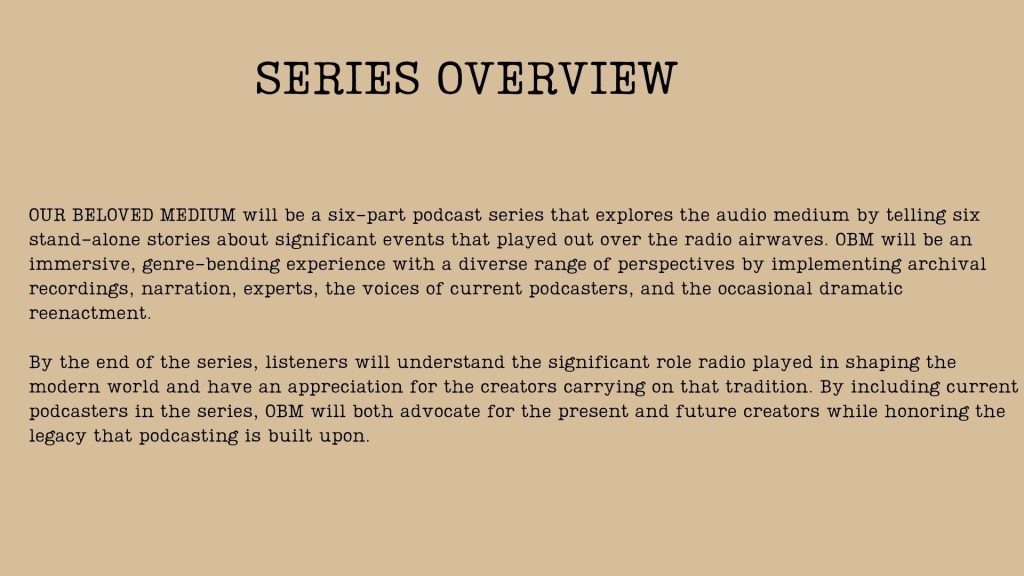
During each episode, The Medium will “air” a story from their “vault”, and this is where the real stories come in. Producer Stuart Barefoot will report on and produce six stand alone stories, each of which will be about an event that played out over the radio airwaves. While each episode will be rooted in historical storytelling, they will be offramps to tell bigger stories about our current media landscape and where we’re possibly headed.
- Part One: Hearts and Minds. In the leadup to WW2, Nazis hijacked their own radio station and tried to frame Poland. Known as the “Gleiwitz Incident” this was part of a wide ranging propaganda campaign to drum up support within Germany for invading Poland
- Part Two: Always On. By the 1990’s talk radio ruled the airwaves. From conservative talk radio, to drive time sports shows,everyone was talking and people were listening. At night, when most people were asleep, a man named Art Bell commanded a massive audience of truckers, lt shift workers and anyone else who found themselves awake at 3 am. Known as a place for people to call in talk about conspiracy theories, an urban legend was born in real time on his show, Coast to Coast AM
- Part Three: Looking for Pirates. The history of Pirate Radio dates back to pretty much the beginning of radio, or at least as long as the airwaves have been regulated. This story will briefly explore the history of radio piracy, but will also try to answer one simple question. Is Pirate Radio still a thing?
- Part Four: Radio Haiti. A Story of resistance and resilience
- Part Five: Filthy Words. In an effort to protect free speech, a small community radio station takes the FCC to court…the Supreme Court
- Part Six: Pictures on the Radio. When MTV launched in 1981, it could have been the end of music on the radio. Combined with the rise in talk radio, it seemed like radio was no longer a place to hear music. But a group of scrappy independent, community and college radio stations took up the mantle and ushered in a new era of punk, underground and indie music.
In addition to the real stories, a fictional arc will play out across six episodes. As Opus attempts to buy WFYZ, Gia does not plan to go quietly. In addition to a campaign to raise money, Gia plans to expose Opus and their founder, Easton Baines for the frauds that they are.
Will she succeed? What if she’s wrong? What if radio is an outdated medium? What role does it play in our future in the age of constant streaming?